Română | home | site map | google search  
Biodiversity conservation and community development in Transylvania
Conservarea biodiversităţii şi dezvoltare comunitară în Transilvania

Research: practical measures for conservation of High Nature Value grasslands

Târnava Mare as a model for European grassland conservation

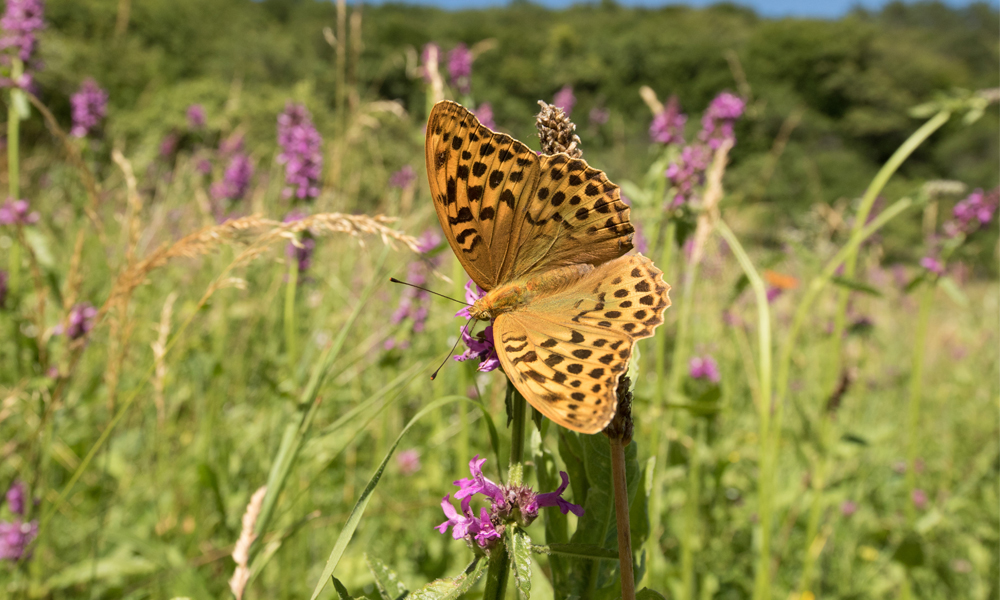
A growing weight of evidence on the progress of grassland conservation across Europe indicates a steady decline in grassland habitat extent and quality, in grassland diversity, and in wildlife associated with grasslands including butterflies.

Various reasons have been proposed for this decline including European policy (especially CAP) and the failure of the biodiversity conservation elements (specifically agri-environment) within the rural development axes to address the threats. Intensification of farmland and development of transport, housing and industry have also been cited in terms of the fragmentation of habitat, an insidious potential cause which may worsen with climate change.

In spite of considerable state and NGO sector involvement in implementation of national and EU environmental legislation in many member states, particularly in the western EU, decline continues unabated. The objectives of the 2010 countdown initiative are not being met. Nature is resilient and able to heal itself to some extent, but below some threshold of environmental damage ceases to be the case. The process of loss may be sequential in terms of the wildlife elements involved, similar to the loss of ever more important pieces in a chess game.

Fundatia ADEPT is undertaking a study in collaboration with universities based in Romania, Germany and the UK. The project will examine Tarnava Mare as an area of Europe with relatively intact traditional farming systems, and focus on the first pieces to be lost in the break-up of natural landscapes.

A suite of wild-flower species which may represent indicators of large healthy pastoral systems and open landscapes, once relatively common in the UK and now in severe decline or locally extinct, is being studied in the area, where extensive grassland habitats still occur.

The role of scale will be examined in the distribution of these potential indicators in relation to landscape connection, patchiness and quality, and in relation to grassland management systems and newly implemented agri-environment schemes. 

The research will be compared, through collaboration with studies in western Europe, in a ‘before and after’ of modern farming. Information revealed in this study will help to reformulate methods or even perspectives for conserving grassland in areas of Europe exhibiting the biggest grassland declines.
 

Farming

Farming in the area

Agri-environment

Research

Food hygiene

International Conference on High Nature Value Farmland - policy and practice, Sibiu, September 2010.

Fundatia ADEPT, University Lucian Blaga and partners will be holding a conference at Sibiu, Romania, in September 2010. This conference will address the concept of High Nature Value Farmland and Landscapes, including definitions, policy implementation, and integration with environmental policies and biodiversity conservation. Details.


Fundatia ADEPT summer school in High Nature Value Grassland ecology, July 2009, Sibiu.

From July 2009, ADEPT will hold two individual one-week courses on aspects of grassland conservation, habitat management and species protection. These residential courses will be mainly field based, with excursions within the major Natura2000 site, and visiting biodiversity hotspots, but returning to the field centre and seminar room in Saschiz, a traditional Saxon village in the heart of the biodiverse landscape of the Tarnava Mare area.
Details.


Sponsor logos