Română | home | site map | google search  
Biodiversity conservation and community development in Transylvania
Conservarea biodiversităţii şi dezvoltare comunitară în Transilvania

EU Life Nature: Saving the Important Pastoral Ecosystems of Transylvania (STIPA) 

Life logo Natura 2000 logo

Total budget: €356.330
EU contribution: €259.515
Orange Romania contribution: €96.815
Period: 01/10/2010 - 30/09/2013.

Summary

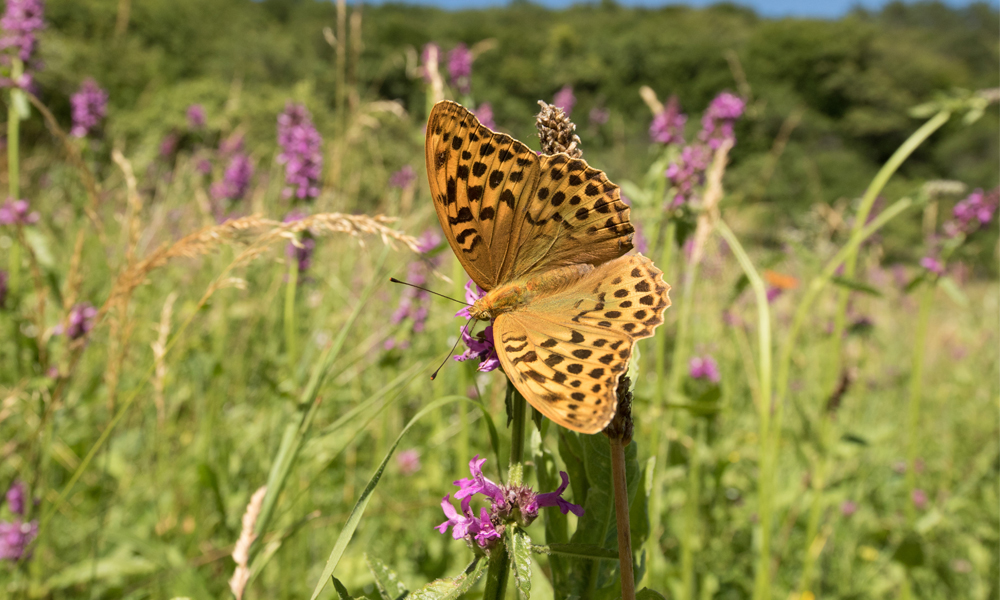
The Sighisoara-Tarnava Mare SCI (Natura 2000 site  declared under the EU Habitats Directive) is characterised by dry grassland habitat  types which are threatened in Europe. About 6.000 ha of the 85,374 ha area is comprised of these habitats. Much of this area is common grazing, under management of the Town Halls. A significant part of these habitats in the project area is either abandoned or overgrazed, for economic reasons. Farmers do not get sufficient economic return for managing them traditionally. Overgrazing causes loss of species richness. Abandonment leads to the spread of thorny scrub, and accumulation of dead grassy material. In both case, loss of habitat condition in common grazing land and in privately owned hay meadows leads to loss of associated flora and fauna including important bird and butterfly species. These effects are obvious but still easily reversible by re-establishment of traditional management.  The STIPA project is the only LIFE Nature project granted to Romania in 2010.

Detail

The aim of this project is to improve the conservation status of two priority dry grassland habitats in the Sighisoara -Tarnava Mare SCI:
  • 6210* Semi-natural dry grasslands and scrubland facies on calcareous substrates (Festuco-Brometalia) with important orchid sites
  • 6240* Sub-Pannonic steppic grasslands.
This is being carried out in close cooperation with the Town Halls and farmers who own these grasslands.

An estimated 7% of the 85,374 ha Tarnava Mare area is comprised of these habitats - ca 6,000 ha. Much of this massive area is under public ownership and therefore the control of the Town Halls.

Around 30% of these grasslands are in poor condition, the result of adandonment or intensification, since it is no longer economical to farm these areas traditionally.

Intensification causes loss of species diversity and the spread of invasive plants.

Abandonment, the failure to mow, graze and clean these grasslands, allows thorny scrub to spread and dead grassy material to accumulate, also causing loss of important flora and fauna species.

These effects are obvious but still easily reversible by re-establishment of traditional management.

Under this project, ADEPT is
  • carrying out innovative habitat and species mapping, and consultations with the farmers and Town Halls who manage the land, in order to design effective and practical conservation action plans for different sites. See further details.
  • carrying out demonstration and direct conservation actions using innovative machinery. See further details.
  • carrying out a variety of awareness-raising activities with farmers, other land managers, and with local schools in order to increase local interest in these habitats and in the wonderful fauna and flora species they support. See further details.
  • helping the design of farmer-friendly agri-environment schemes, which are necessary in order to give farmers the economic incentive to continue to manage the land. See further details.


Conservation Action Plan completed for the STIPA project area

STIPA CAP Final - EN versionSTIPA CAP Final - RO version
In December 2012, the STIPA team led by Jan Šeffer of Daphne Institute for Applied Ecology, Bratislava, assisted by Viera Stanova Šefferová (Daphne Institute), Sabin Bădărău (Babes-Bolyai University, Cluj-Napoca) and Nat Page and Răzvan Popa (Fundația ADEPT Transilvania) completed the Conservation Action Plan for the restoration and protection of the two dry grassland habitat in the Târnava Mare area.

It is the result of dry grassland habitat inventories, field studies and consultation with the farmers and local authorities of the communes of the STIPA project area: Bunești, Saschiz, Vânatori, Albești, Apold, Danes, Laslea, Biertan, over the period January 2011-December 2012.

The Conservation Action Plan is available in English (full technical version) and Romanian (shorter working version).

The Conservation Action Plan can only succeed with the active support of local authorities and farmers. We are pleased that this plan has been well received by stakeholders, since it will bring financial benefits to local people through increased productive grassland areas, and increased access to Common Agricultural Policy funding: both Direct Payments and agri-environment payments.

LIFE+

Our partners

Darwin

EFNCP

Fauna and Flora International

Grundtvig

Innovation Norway

LIFE+

Mountain Trip

Orange

Other partners

Some ADEPT activities under LIFE Nature STIPA project


HRH The Prince of Wales being shown the Brielmeier by project managers Nat Page (left) and Cristi Gherghiceanu (right) in May 2011, at a gathering of Mayors and farmers from the 8 town halls of the project area. 


Razvan Popa presenting the support payments, and associated obligations, of dry grassland management to farmers in the area.


Schools activities: mountain-bike trail across the grasslands, combined with innovative locally-made flora and faune interpretation panels  (below).

rule

Communication between LIFE grassland projects

The STIPA project is in contact with other LIFE projects that are concerned with grassland conservation.

In 2011 we visited the Cranborne Chase Area of Outstanding Natural Beauty (CCAONB) project in UK. CCAONB are responsible for one of the UK’s largest dry grassland sites.

We are also in contact with the LIFE RI.CO.PR.I Project (Restoration and Conservation of arid grasslands in Central and Southern Italy), aimed at recovery and conservation of two dry grassland habitats which share very similar threats with the dry grassands of the STIPA project.

Further details on STIPA Communications page.

rule
Sponsor logos